In today’s threat landscape, cybercrime is evolving fast—and it’s no longer just about defending on-premise services or combating traditional malware. Criminals and state actors are using AI to automate attacks, craft frighteningly convincing social engineering campaigns, and exploit vulnerabilities at scale.
That’s why we asked two international law enforcement experts to share their insights and recommendations at the latest MSP GLOBAL event.
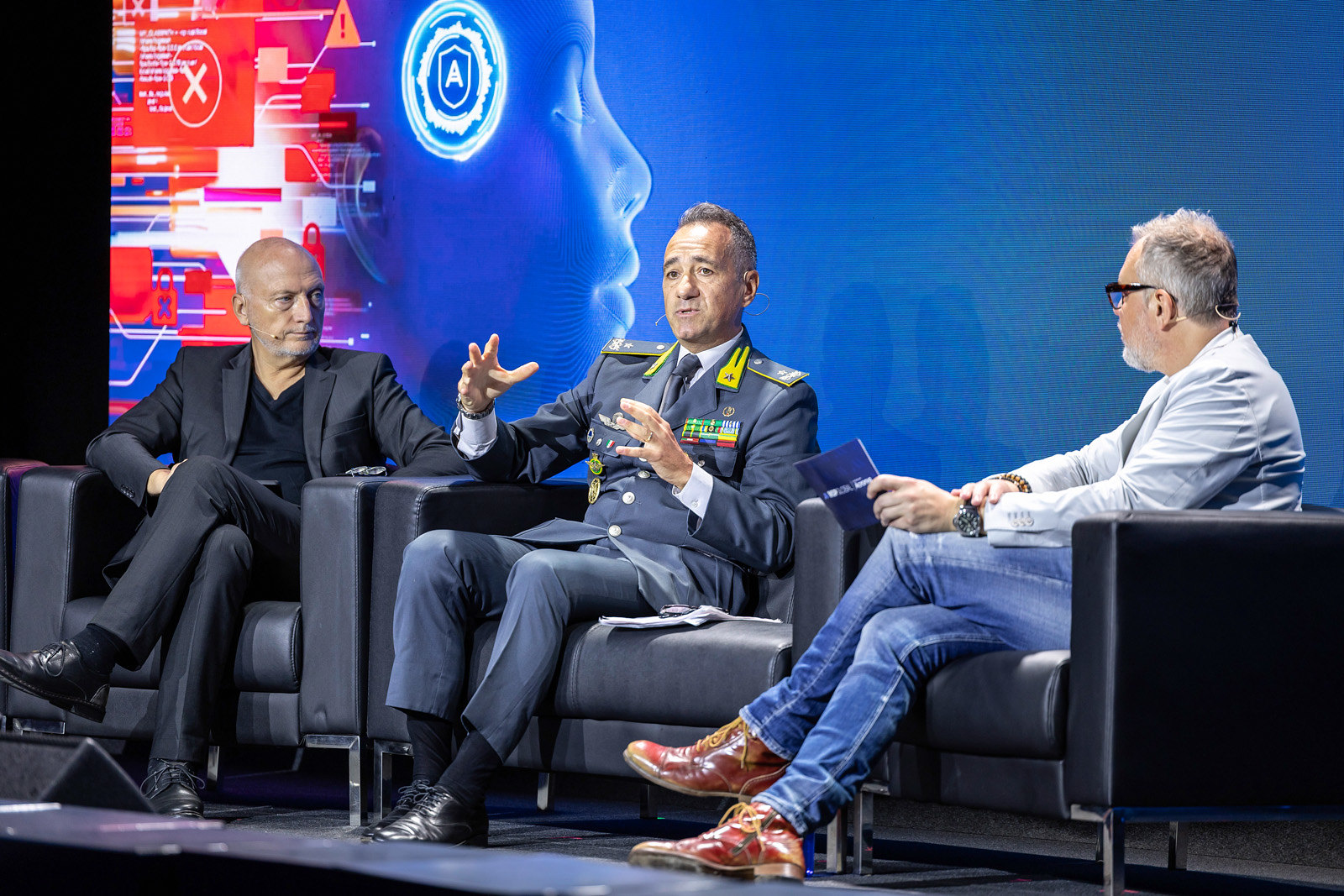
Fred-Mario Silberbach is Head of the Cybercrime Strategy Subdivision at BKA, Germany’s Federal Police. He was joined on stage by Brigadier General Salvatore Russo of the Italian Guardia di Finanza.
For MSPs—who often act as extended IT and security teams for large numbers of clients—understanding how law enforcement views AI-enabled threats, and how to work with authorities when attacks occur, is critical. MSPs that grasp these dynamics can position themselves not just as reactive defenders, but as trusted advisors helping clients anticipate and mitigate sophisticated attacks.
Watch the session—or check out key takeaways below.
Key sections
2:38 Cyber attacks are costing Germany €200 billion
13:23 Four steps of Italian cyber defence
18:49 The importance of cross-border cooperation
27:14 The role of MSPs in cyber protection
30:49 Cyber crime and the mafia
5 takeaways every MSP needs to understand
AI is reshaping the cybercrime landscape—rapidly
AI-powered tools lower the barrier to entry for cybercriminals and increase the volume and sophistication of attacks. MSPs need to expect more AI-assisted scams, phishing, and autonomous malware.
Law enforcement is adjusting, but criminals often move faster
Police and federal cyber units are investing in tools and expertise to combat AI-enhanced crime, but the pace of innovation on the attacker side demands MSPs maintain strong defensive postures and share insights with peers and authorities.
The MSP role increasingly intersects with cyber incident response
MSPs are often the first to detect breaches and can provide crucial logs, context, and response actions that help law enforcement trace threats and mitigate impact effectively.
Collaboration across the ecosystem leads to better outcomes
MSPs, clients, vendors, and law enforcement all have pieces of the larger security puzzle. Sharing intelligence and building formal response and reporting processes create resilience that benefits everyone (except for the criminals).
Proactive security—not just reactive response—is now table stakes for MSPs
MSPs who help clients adopt AI-aware security strategies—including threat hunting, advanced detection systems, and employee training—reduce the frequency and severity of breaches.
What this means for MSPs today
Cybersecurity is fast becoming the defining battleground for MSP differentiation and client trust. AI-driven attacks—from deepfake-assisted scams to automated spear-phishing—are not theoretical threats; they are active vectors criminal groups are exploiting.
MSPs that integrate AI-aware threat defence, work closely with law enforcement when breaches occur, and help clients adopt resilient practices will not only minimize damage but also build deeper, strategic relationships.